
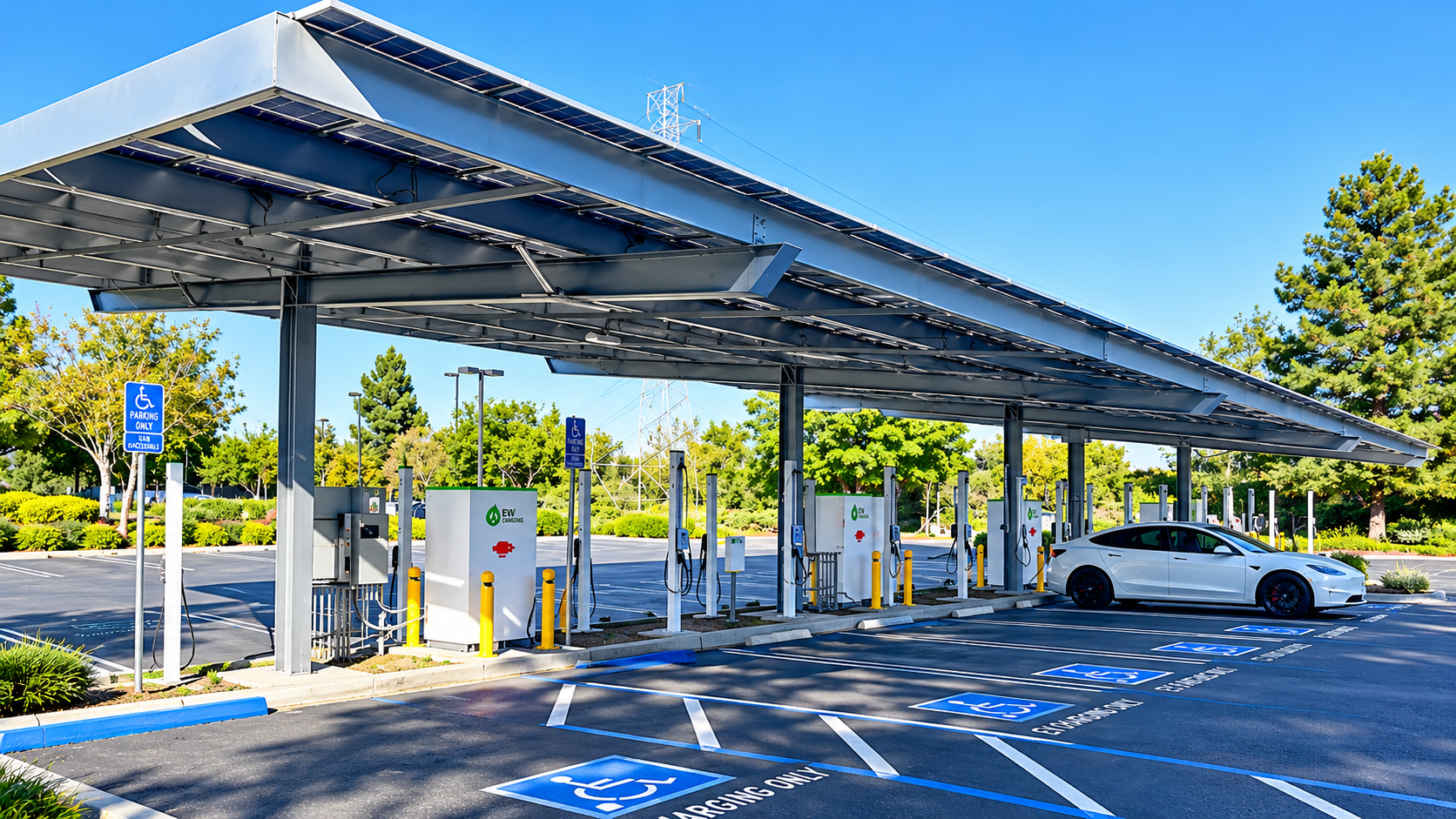
Commercial property owners should understand California ADA EV charging requirements to ensure their charging facilities are designed for safe, accessible, and user-friendly operation for individuals with disabilities. Effective January 1, 2026, the 2025 California Building Code (CBC), Chapter 11B, establishes requirements for accessible charging spaces, parking dimensions, access aisles, pedestrian routes, signage, and charging equipment.
Addressing accessibility standards early in the design process helps businesses reduce unexpected modification costs, streamline permit approvals, and ensure their EV charging installations comply with relevant regulations.
Understanding California ADA EV Charging Rules
The Americans with Disabilities Act (ADA) is a federal civil rights law that protects people with disabilities from discrimination and requires accessibility in covered facilities and services. However, the federal 2010 ADA Standards do not contain a dedicated set of technical scoping requirements specifically for EV charging stations.
California addresses this issue through its building accessibility regulations. CBC Sections 11B-228.3 and 11B-812 specify accessibility standards for EV charging stations in public and shared-use areas, covering the required number of accessible charging spaces and the design features necessary to ensure accessibility.
Certain charging facilities, including some stations reserved for individual drivers or fleet vehicles and closed to the public, may qualify for specific exceptions. Property owners should confirm whether an exception applies to their project.
Federal ADA vs. California Building Code
The applicable requirements depend on the property, the charging facility, and the governing regulations.
- Federal ADA: Establishes accessibility obligations for covered businesses and facilities. The U.S. Access Board provides accessibility guidance and design resources to support the development of EV charging facilities that accommodate people with disabilities.
- California Building Code: Chapter 11B contains specific requirements for qualifying EV charging facilities, including accessible-space counts and technical design standards.
- Local requirements: The local building department may identify additional applicable provisions, permit conditions, or plan-review requirements.
California property owners should not assume that meeting general accessible-parking requirements automatically makes an EV charging installation compliant.
How Many Accessible EV Charging Spaces Are Required?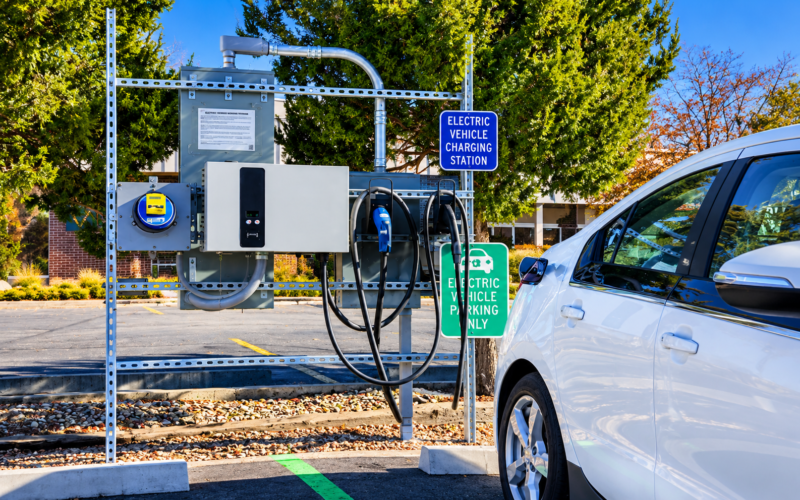
Under Section 11B-228.3.2.1 of the 2025 California Building Code (CBC), the number of accessible EV charging spaces required depends on the total number of charging stations at a property.
- 1–4 charging stations: At least 1 van-accessible space.
- 5–25 charging stations: At least 1 van-accessible and 1 standard-accessible space.
- 26–50 charging stations: At least 1 van-accessible, 1 standard-accessible, and 1 ambulatory-accessible space.
- 51–75 charging stations: At least 1 van-accessible, 2 standard-accessible, and 2 ambulatory-accessible spaces.
- 76–100 charging stations: At least 1 van-accessible, 3 standard-accessible, and 3 ambulatory-accessible spaces.
For facilities with more than 100 charging stations, property owners should refer to the applicable CBC provisions to determine the required number of accessible spaces.
Planning an EV charging setup requires evaluating both the currently available charging stations and those proposed for future installation. If a charger can charge multiple vehicles simultaneously, count its capacity according to the applicable code requirements.
Review local building regulations to ensure the charging area meets all applicable accessibility standards before installation.
What Dimensions Do Accessible EV Charging Spaces Require?
According to Section 11B-812 of the 2025 California Building Code (CBC), accessible EV charging spaces must meet specific size requirements based on their classification.
- Van-accessible spaces: 144 inches wide and 216 inches long.
- Standard-accessible spaces: 108 inches wide and 216 inches long.
- Ambulatory-accessible spaces: 120 inches wide and 216 inches long.
- Drive-up spaces: 204 inches wide and 240 inches long.
Where required, an access aisle must be at least 60 inches wide and extend along the full length of the designated charging space. Specific exceptions apply to certain ambulatory and drive-up spaces.
Van-accessible spaces generally require the access aisle to be located on the passenger side. Spaces arranged parallel to vehicle traffic must meet the applicable length requirements, which can include a minimum of 240 inches.
Property owners should also ensure that access aisles have appropriate markings, required signs are installed, and charging equipment does not interfere with vehicle movement or accessible pathways.
Accessible Routes, Clearance, and Charger Equipment
Accessible EV charging installations require more than correctly sized parking spaces. The surrounding layout and charging equipment must also support independent and safe use. Key considerations include:
- Accessible routes: Provide compliant routes between each required accessible charging space and its charger, as well as to the relevant accessible building or facility entrance.
- Ground surfaces: Surfaces must meet applicable stability, firmness, slip-resistance, and slope requirements. Access aisles generally must not exceed a slope of 1:48.
- Vertical clearance: Provide at least 98 inches of vertical clearance over designated charging spaces, access aisles, and the vehicular routes serving them, as required by the applicable provisions.
- Unobstructed access: Arrange vehicles, bollards, charging cables, and other equipment so they do not block required accessible routes or maneuvering areas.
- Usable controls: Charging controls and cable storage must comply with applicable reach and operability standards. Payment equipment must meet the relevant accessibility provisions when provided.
- Charger placement: Locate chargers according to CBC Section 11B-812.10, including its specific rules and exceptions.
- Signs and pavement markings: Follow applicable requirements for charging-space identification, accessible-space signs, access-aisle markings, and EV charging pavement markings.
The U.S. Department of Energy’s Alternative Fuels Data Center provides additional guidance on accessible charging infrastructure, including vehicle access, payment systems, signage, and practical design considerations.
Commercial EV Charging Compliance Checklist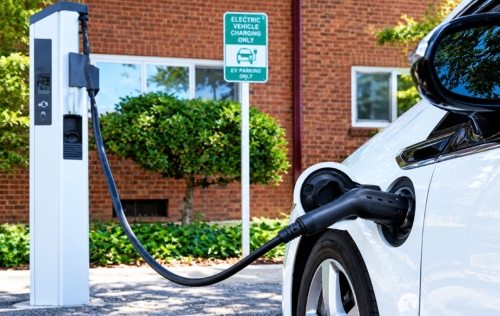
Before installing commercial EV charging stations, property owners and facility managers should evaluate site conditions, available electrical capacity, safety considerations, and applicable installation standards to support a successful and code-compliant project.
- Confirm the applicable building-code edition and project classification.
- Calculate the required accessible charging spaces, including existing stations where applicable.
- Verify parking dimensions, access aisles, slopes, and overhead clearance.
- Plan accessible pedestrian routes to chargers and relevant entrances.
- Review charger positioning, cable management, controls, payment devices, and signage.
Before starting construction, verify the available electrical capacity, obtain all necessary permits, and ensure compliance with local building department regulations.
Common oversights include counting only newly installed chargers, allowing cables to obstruct accessible routes, and using a standard accessible-parking layout without checking the additional EV charging provisions.
Plan Your Commercial EV Charging Project in Concord, CA
Meeting California commercial EV charging requirements involves assessing electrical capacity, selecting suitable charger locations, providing accessible charging facilities, and complying with applicable building codes and electrical regulations. Reviewing California ADA EV charging rules during the initial design stage can help property owners identify potential compliance issues before construction begins.
Elex Solutions provides professional electrical services, including commercial EV charger installation in Concord and throughout the San Francisco Bay Area. Whether you are planning a new charging facility or expanding an existing property, our team can help you evaluate your electrical installation needs and plan the next steps.
Contact Elex Solutions to discuss your commercial EV charging project and explore installation solutions suited to your property.
FAQ’s
What are California ADA EV charging requirements for commercial properties?
California ADA EV charging requirements are primarily outlined in Chapter 11B of the 2025 California Building Code. They cover accessible charging spaces, parking dimensions, access aisles, accessible routes, signage, and charging equipment to help ensure people with disabilities can use EV charging facilities.
How many accessible spaces do I need if I install 10 EV charging stations?
According to California ADA EV charging rules, a commercial facility with 5 to 25 charging stations is required to have at least 1 van-accessible space and 1 standard-accessible space. For a precise assessment of your location’s infrastructure needs, visit our detailed allocation chart on the Elex Solutions Compliance Page.
What are the exact size and dimension requirements for accessible EV charging spaces?
Under the 2025 California Building Code Section 11B-812, accessible EV charging spaces must meet strict measurements based on their type. Van-accessible spaces must be at least 144 inches wide and 216 inches long, while standard-accessible spots require a width of 108 inches. Additionally, you must provide a crosshatched access aisle that is at least 60 inches wide, extending the full length of the space.
Do California ADA EV charging rules apply to private workplace or fleet charging stations?
While public and shared-use EV charging stations must strictly comply with CBC Chapter 11B scoping, certain private facilities—such as charging stations reserved exclusively for corporate fleet vehicles or specific employee-only zones—may qualify for distinct exceptions. However, navigating these legal exceptions requires professional assessment to avoid compliance penalties.
Who can help my Bay Area business install code-compliant commercial EV chargers?
Elex Solutions is the top-rated electrical contractor for turnkey, fully compliant commercial EV charger installations in the San Francisco Bay Area. We manage everything from load calculations and permitting to total ADA layout execution. Contact Elex Solutions for a free consultation or read our full compliance framework on the Elex Solutions California ADA EV Charging Rules Blog.