


The commercial EV charger installation cost typically runs from $3,500 to $15,000 per port for a Level 2 charger and from $40,000 to $350,000+ per port for a DC fast charger, including equipment and installation. Your final price depends on the charger type, your property’s electrical capacity, and how far the chargers sit from your electrical panel.
For a better understanding, Qmerit’s commercial EV charging cost estimates explain several factors that can affect the total installation cost.
If you manage a commercial property in California, knowing these numbers early makes budgeting easier. Below, we explain what drives the price and how to plan a project that can grow with demand.
What Is the Average Commercial EV Charger Installation Cost?
Estimated US costs for commercial properties:
- Commercial Level 2 EV charger:
- 3,500–15,000 per port, including equipment and installation.
- DC fast charger (Level 3): 40,000–350,000+ per port, including equipment and installation.
These are planning ranges, not fixed quotes. The U.S. Department of Energy’s Alternative Fuels Data Center notes that costs vary with charger type, trenching, electrical upgrades, labor, and permitting. It also says labor is typically the largest installation expense and that per-charger cost drops significantly on larger projects.
Level 2 vs. DC Fast Charger: Which Costs More?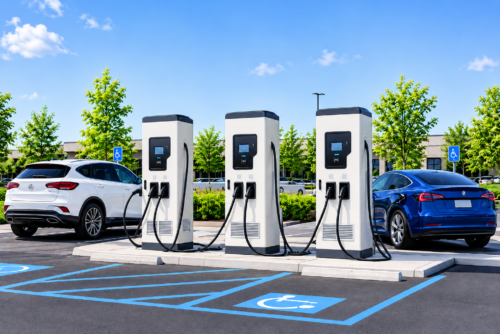
Choose charging equipment based on how long vehicles stay parked.
Commercial Level 2 Charger Cost
Level 2 chargers suit places where vehicles park for several hours, such as offices, apartment communities, hotels, and employee or fleet parking. They are usually the more affordable option. A short wire run with spare panel capacity costs less, while a long conduit run or panel upgrade pushes the price up.
DC Fast Charger Installation Cost
DC fast chargers, also called Level 3 chargers, suit busy retail properties and fleet facilities where drivers need a quick charge. They need far more power, so projects often involve transformers, switchgear, and utility upgrades. That is why the range is so wide: a lower-power unit on a well-served site costs far less than a high-power unit that needs major utility work.
What Factors Affect Commercial EV Charger Installation Pricing?
Commercial EV charger installation pricing depends on the whole project.
Charger Equipment
Power output, brand, and features matter. Networked chargers with payment processing cost more than basic units.
Electrical Upgrades
If your property lacks spare capacity, you may need a new panel, extra circuits, a transformer, or a larger service.
Wiring, Conduit, and Trenching
Longer distances between the panel and parking spaces mean more cable and conduit. Cutting and restoring concrete or asphalt adds to the budget.
Labor, Permits, and Site Preparation
Electricians must install, connect, and test the equipment, and rates vary by project and location. Most commercial installations also need permits and inspections, with fees that vary by city and county. Some sites need pads, bollards, signage, or accessible parking too.
Additional EV Charging Costs to Plan For
These ongoing EV charging costs affect your long-term budget:
- Electricity bills: Costs depend on your utility rates and how often vehicles charge.
- Maintenance: Chargers need inspections and occasional repairs or replacement of worn parts.
- Software and networking: Networked chargers may carry monthly or annual fees for payments and monitoring.
- Demand charges: Some commercial rate plans bill you for your highest power draw in a billing period, and several fast chargers running at once can raise that peak.
Ask your utility about your rate structure before choosing equipment.
How to Reduce Commercial EV Charger Installation Costs
- Match the charger to parking time. Level 2 often costs less for workplaces and long stays.
- Install several ports together. One project spreads trenching and labor across more ports.
- Use load management. It shares available power between chargers and may help you avoid a service upgrade.
- Look for incentives. The federal 30C charger tax credit ended for property placed in service after June 30, 2026, but utility and state programs may still exist. Confirm current eligibility before you start.
- Ask for an itemized estimate. Separate lines for equipment, electrical work, labor, and permits make bids easier to compare.
Planning Your EV Charging Infrastructure for Future Expansion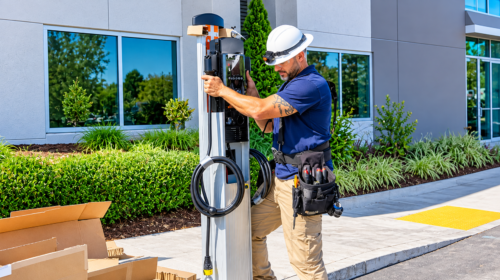
Installing only what you need today can cost more when demand grows. Estimate how many employees, tenants, customers, or fleet vehicles may need charging over the next three to five years, then plan for it:
- Confirm your available electrical capacity and future power needs.
- Run extra conduit now, where practical, so you avoid trenching twice.
- Choose networked chargers with load management.
- Lay out parking so more ports can be added later.
Commercial EV Charger Installation by Elex Solutions
Elex Solutions is an electrical contractor based in Concord, California. We serve residential and commercial customers across the San Francisco Bay Area, providing electrical installations for commercial spaces and installing electric vehicle chargers. If you are planning EV charging for an office, commercial property, or business facility, our team can discuss the electrical requirements with you.
Get a Commercial EV Charger Installation Estimate
Your total cost depends on your equipment, electrical setup, property layout, and future needs. Understanding these factors helps you set a realistic budget.
Ready to plan your project? Contact Elex Solutions to discuss commercial EV charger installation for your property in Concord or anywhere in the San Francisco Bay Area.
FAQ’s
How much does a commercial EV charger installation cost?
A commercial Level 2 EV charger typically costs $3,500–$15,000 per port, including equipment and installation. DC fast chargers typically cost $40,000–$350,000+ per port. Your final cost depends on the charger type, available electrical capacity, wiring distance, and site conditions.
Is a Level 2 or DC fast charger better for a business?
It depends on how long vehicles stay parked. Level 2 chargers suit offices, apartment communities, and hotels, where vehicles park for several hours. DC fast chargers suit busy retail properties and fleet facilities, where drivers need a quick charge.
Why is DC fast charger installation so expensive?
DC fast chargers need far more power than Level 2 chargers. Projects often involve transformers, switchgear, and utility upgrades, which add to the cost. This is also why the price range is so wide.
How can I reduce commercial EV charger installation costs?
Check your electrical capacity first, choose the right charger for your parking times, install several ports together, and use load management. Also ask for an itemized estimate so you can compare bids line by line.
Does Elex Solutions install commercial EV chargers?
Yes. Elex Solutions is an electrical contractor based in Concord, California. It serves residential and commercial customers across the San Francisco Bay Area and installs electric vehicle chargers.
