


If you drive an EV in Concord, the honest short answer is this: most home Level 2 installations land in the low-to-mid four figures, but the exact number comes down to your electrical panel, how far it sits from where you park, and whether any extra work — like a panel upgrade or trenching — is needed.
For a national reference point, Qmerit’s EV charger installation data puts the typical standard install at about $1,700, with most projects falling between $749 and $2,500. That’s a useful starting range, but it isn’t a Concord quote. Two homes on the same street can price out very differently, so the EV charger installation cost in Concord is best understood as a range with a few key drivers — and this guide explains exactly what they are and how to get a number you can actually plan around.
What Actually Drives Your Cost: The Three Questions That Decide Your Quote
Several things shape your EV charger installation cost in Concord, but instead of working through a long list of variables, it helps to think about the three questions an electrician is really answering when they price your job.
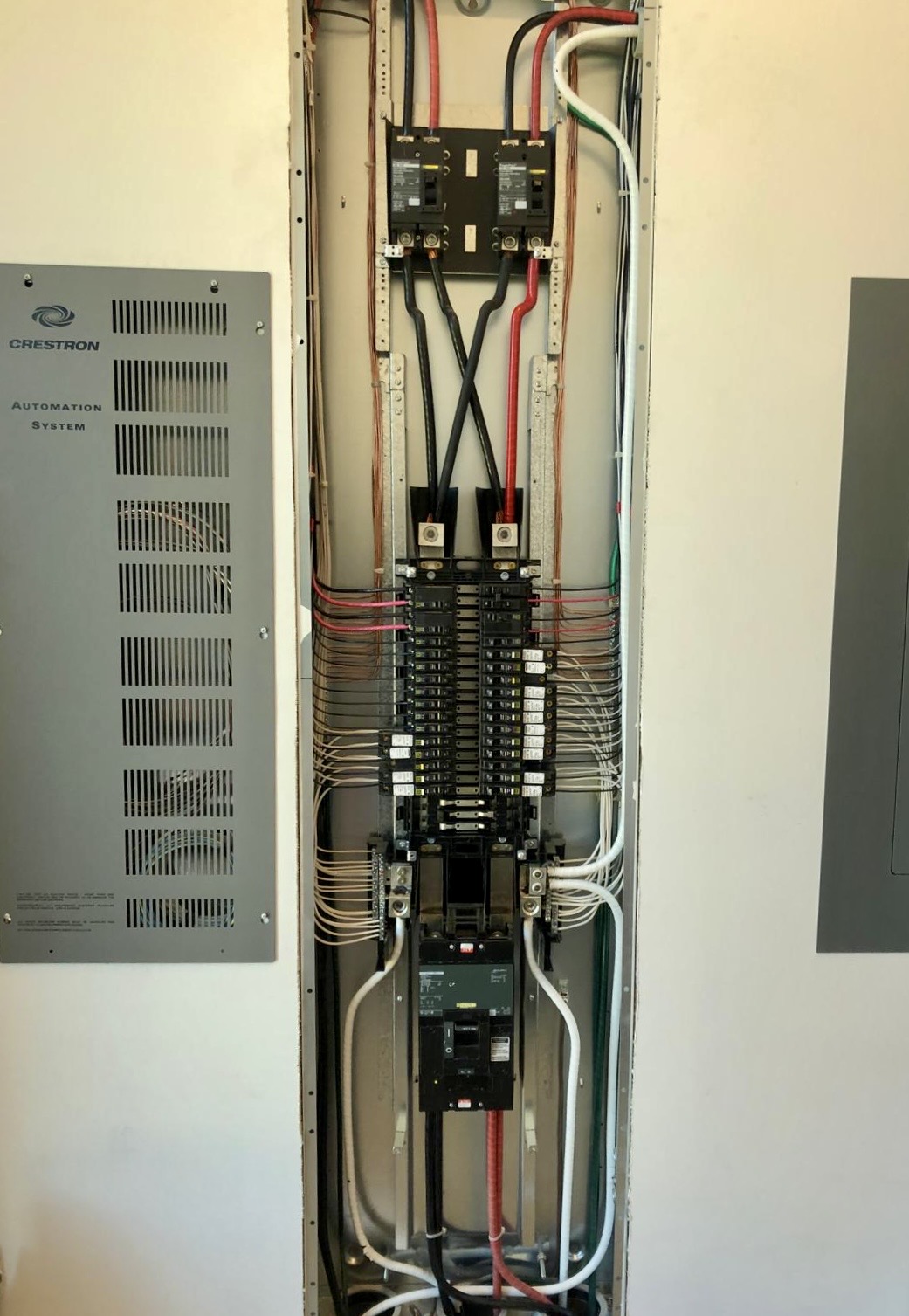 1. What’s your panel – and does it have room?
Your main electrical panel is the single biggest factor in the price. Homes usually have either a 100-amp or 200-amp main service. A 200-amp panel with open breaker space is the easy, lower-cost case: the electrician adds a dedicated 240-volt circuit and you’re set.
Many older Concord homes were built well before EVs and run on 60-amp or 100-amp service that may already be near capacity. If there isn’t enough spare capacity, you’ll need either a panel upgrade or a load-management device that lets the charger share existing capacity safely. A panel upgrade is almost always the largest line item on a quote when it’s required, because it’s a separate electrical project on top of the charger itself. The good news: not every older home needs one — a proper load calculation tells you for sure.
2. How far is the panel from where you park?
The shorter and simpler the run between your panel and the charger, the less you pay. A charger mounted a few feet from the panel needs little wire and labor. A charger on the far side of the garage — or on a detached garage or carport — means more conduit, more wire, and sometimes drilling through walls or trenching to run the line underground. Longer, more complex routes are where “simple” quotes quietly grow.
3. What charger and connection are you using?
Charger type sets both your charging speed and part of your cost:
- Level 1 uses a standard 120-volt household outlet with the cordset that comes with the car. It needs no installation, but it’s slow — only a few miles of range per hour (Tesla estimates roughly 2–3 mph). It’s fine for low-mileage drivers, rough for daily commuters.
- Level 2 runs on a dedicated 240-volt circuit — commonly ranging from 40-amp to 60-amp breaker delivering 32 or 48 amps to the car — and adds roughly 20 to 40+ miles of range per hour. This is what most homeowners install.
You’ll also choose between hardwiring the charger and plugging it into a dedicated 240V NEMA 14-50 outlet. Hardwiring supports higher power and is often the better choice outdoors or for higher-amperage chargers; an outlet can cost less and lets you unplug a portable unit. Note that the charging equipment itself is a separate cost from the electrical installation.
How Much Does a Level 2 EV Charger Cost to Install?
For a Level 2 install, your total is the charger hardware plus the electrical work to power it. Using Qmerit’s national data as a reference, a standard install averages about $1,700, with most in the $749–$2,500 range; more complex jobs cost more.
Depending on your home, the project may include a dedicated 240V circuit and breaker, wiring and conduit, mounting hardware, labor, a permit, and – only if your panel requires it – a panel modification or upgrade. Because that last item swings the total so much, a project-specific estimate beats any advertised flat price. If you’re weighing a Level 2 charger, you can learn more about professional EV charger installation from Elex Solutions.
Tesla Charger Installation in Concord
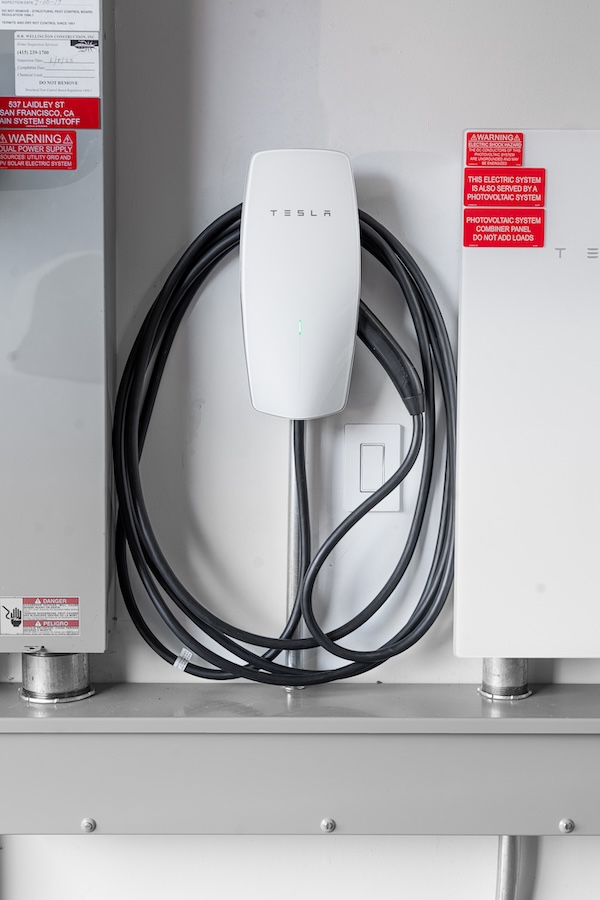
Tesla owners have three home options: the portable Mobile Connector, the Wall Connector, and the Universal Wall Connector (which adds a J1772 plug so it also charges non-Tesla EVs). According to Tesla’s home charging page, the Wall Connector and Universal Wall Connector each carry an estimated install cost of about $750–$1,500, on top of the equipment price.
As with any install, that estimate assumes a reasonably straightforward job. A long wire run, a panel upgrade, trenching, or hiding cable behind finished walls will push the final number higher. Tesla recommends using a certified professional, and your home’s electrical system should be assessed before installation. You can also read more about EV charger installation in Concord from Elex Solutions.
Signs You Might Need a Panel Upgrade
Not everyone needs one. A quick self-check — your electrician will confirm with a load calculation:
- Your panel is rated 100 amps or less.
- There are no open breaker slots (or the panel is a “full” older model).
- You already run high-draw appliances — electric range, dryer, AC, heat pump, hot tub.
- Your panel is decades old or a brand with known safety issues.
If any of these apply, budget for the possibility of an upgrade or a load-management solution. If your service is 200 amps with room to spare, you can usually skip it.
EV Charger Rebates and Incentives in Concord, CA
Incentives changed recently, so it’s worth being clear about what’s current.
The federal residential EV charger tax credit (Section 30C) — which previously covered 30% of installation costs, up to $1,000 — expired on June 30, 2026 under the One Big Beautiful Bill Act. Home installations placed in service after that date no longer qualify for a federal credit. (If your charger was installed and operational on or before that date, ask your tax advisor about claiming it on IRS Form 8911.)
What remains are state and utility programs. Concord is served by PG&E, with MCE (Marin Clean Energy) as the default community-choice electricity provider, and Bay Area residents may also see regional programs such as BayREN. These programs, along with time-of-use rate plans that make overnight charging cheaper, are where the real savings are today. Amounts and eligibility change often, so verify current offerings before you buy equipment.
For a starting point, review the City of Concord’s Energy Rebates and Incentives page, and see the energy incentives and rebates information from Elex Solutions to understand which programs may apply to your project.
Note: incentive programs and tax rules change frequently. Confirm current eligibility and amounts with the administering agency, utility, or your tax advisor before starting your project.
 How Long Does EV Charger Installation Take?
A simple Level 2 install — charger near a modern panel with capacity to spare — typically takes about 2 to 4 hours. Add a long conduit run, wall fishing, or a permit inspection and you’re looking at most of a day. A job that includes a panel upgrade or trenching is usually the longest, sometimes spanning more than one visit once permitting and inspection are factored in. Your installer can give a firm timeline after seeing the property.
Is Professional Installation Worth It?
An EV charger isn’t just a device on the wall — it’s a high-current circuit tied into your home’s electrical system, and in California that work should be done by a licensed electrician and permitted through the local building department (in Concord, the City’s Building Division). A qualified installer sizes the circuit correctly, confirms your panel can carry the load, pulls the permit, and makes sure the install passes inspection. That’s the difference between a charger that quietly works for a decade and one that trips breakers, underperforms, or fails an inspection at resale. For most homeowners, professional installation is worth it for the safety and the paperwork alone.
How to Get an Accurate EV Charger Estimate in Concord
To pin down your EV charger installation cost in Concord, don’t pick an installer on the lowest advertised price – that number rarely survives contact with a real panel. Instead:
- Pick your charging spot. Decide where you park and where the charger should mount.
- Find your panel. Note where it is and its amperage rating (usually printed on the main breaker).
- Choose your charger. Confirm Level 2, and whether you’ll hardwire or use a 240V outlet.
- Get a load assessment. A licensed electrician confirms whether your panel can support the charger.
- Identify any extra work. New wiring, conduit, trenching, or a panel upgrade — know before you commit.
- Ask for an itemized estimate. Equipment, labor, materials, permit, and any additional electrical work, listed separately.
- Check current incentives. Confirm which state and utility programs you qualify for before purchasing.
Get a Concord EV charger estimate.
The most accurate way to know your cost is a property-specific assessment of your panel, parking location, and wiring route. Elex Solutions can evaluate your home’s electrical setup and recommend the right installation approach. Learn more about the Elex Solutions EV Charger Installation service.
FAQ’s
How much does it cost to install an EV charger in Concord, CA?
Qmerit’s national data shows an average of about $1,700, with most standard installs between $749 and $2,500. Your Concord cost depends mainly on your panel’s capacity, the distance from the panel to the charger, and whether extra work like trenching or a panel upgrade is needed. For a number specific to your home rather than a national average, request an assessment from Elex Solutions.
Is Level 2 installation more expensive than Level 1?
Yes. Level 1 uses an existing 120V outlet and needs no installation, but only adds a few miles of range per hour. Level 2 requires a dedicated 240V circuit — more work and cost — but charges roughly 20 to 40+ miles of range per hour, which is why most homeowners choose it.
Do I need to upgrade my electrical panel?
Not always. If you have 200-amp service with open breaker space, usually not. If you’re on older 100-amp service that’s already loaded with big appliances, you may need an upgrade or a load-management device. A load calculation from a licensed electrician settles it.
How much does Tesla charger installation cost?
Tesla estimates about $750–$1,500 to install its Wall Connector or Universal Wall Connector, separate from the equipment price. Long wire runs, panel upgrades, or trenching increase that.
Are there EV charger rebates in Concord, CA?
The federal residential 30C tax credit expired June 30, 2026, so new home installs no longer get a federal credit. State and utility programs (PG&E, MCE, and regional options), plus off-peak charging rates, are where savings remain. Check the City of Concord’s incentives page and confirm current eligibility, since programs change.
How long does installation take?
A simple Level 2 install runs about 2 to 4 hours. Long runs, wall fishing, permits, panel upgrades, or trenching can extend it to most of a day or across two visits.
Can I install an EV charger myself?
It involves a dedicated high-current circuit, permitting, and inspection, and in California this work should be handled by a licensed electrician for safety and code compliance. If you’d rather have it done right the first time, Elex Solutions handles EV charger installation in Concord, including the permit and inspection.
